
Note to my fellow wanderers: This guide was written from my first-hand experiences. I try my best not to over-glamorize any location I travel to because I want HappyWander’s content to be as authentic as possible. My goal is to provide you real information so that you can have the best possible adventures wandering the world. Enjoy!
Are you planning a trip to Miyajima and want to know the best things to do and see? Keep reading to learn 6 of the top experiences on the island—so you can make the most of every moment in this dream destination. From iconic landmarks and historic temples to the island’s 500+ free-roaming deer and vibrant streets filled with local food and souvenirs, Miyajima offers a mix of culture, nature, and unforgettable moments for every type of traveler. Whether it’s your first visit or a return trip, this guide will help you experience the island’s magic.
What is Miyajima and Why Is It Visit Worthy?
Miyajima, officially known as Itsukushima, is a small island located in Hiroshima Bay, Japan, and is widely considered one of the country’s most scenic and culturally significant destinations. Just a short ferry ride from Hiroshima, the island blends natural beauty with deep spiritual heritage, offering visitors a peaceful escape from the city. From lush forested mountains to coastal views, Miyajima delivers a slower, more reflective travel experience that feels distinctly different from Japan’s urban centers.
The island is best known for the iconic Itsukushima Shrine, a UNESCO World Heritage Site famous for its “floating” torii gate that appears to rise from the sea during high tide. This breathtaking sight has become one of Japan’s most photographed landmarks and symbolizes the harmony between nature and spirituality in Japanese culture. Beyond the shrine, visitors can explore historic temples, walk along scenic paths, and even encounter the island’s famously friendly wild deer that roam freely throughout the area.
What makes Miyajima especially worth visiting is the unique combination of cultural depth and outdoor adventure. You can hike or take a ropeway up Mount Misen for panoramic views of the Seto Inland Sea, sample local delicacies like grilled oysters and maple leaf-shaped pastries, and experience a more tranquil side of Japan that feels preserved in time. Whether you’re interested in history, nature, or simply a memorable day trip, Miyajima offers a rich and well-rounded experience that stands out as a highlight of any trip to Japan.
Info About Visiting Miyajima, Japan
Before we jump into the best things to do in Miyajima, here is some general information about visiting this magical town:
Where Is Miyajima?
Miyajima, officially known as Itsukushima, is a small island located in Hiroshima Bay in western Japan. It sits just off the coast of Hiroshima and is easily accessible by a short ferry ride. Despite its proximity to the city, Miyajima feels like a completely different world, known for its peaceful atmosphere, spiritual landmarks, and scenic coastal views.
How Long Should You Spend in Miyajima?
Most tourists that visit Miyajima do so via a tour, usually for about half the day. That being said, you could easily stretch your visit into a full day or even stay overnight to experience a much quieter, more peaceful side of the island once the crowds leave. Spending the night also gives you the chance to see the famous torii gate at both high and low tide, which feels like two completely different experiences.
How to Get to Miyajima
Getting to Miyajima is simple and well-organized, especially if you’re already in Hiroshima. Most travelers take a train to Miyajimaguchi Station, followed by a short ferry ride to the island, which takes about 10 minutes. If you have a Japan Rail Pass, both the train and the JR Ferry are typically included, making it an easy and cost-effective trip.
Are There Any Tours That Take You to Miyajima?
Yes! In fact, I went on a great tour that coordinates all travel for you, including guiding you to some of the best spots in Miyajima. If you’re looking for a tour that handles everything for you, I highly recommend booking this tour:
Best Time to Visit
The “best time to visit” is quite subjective, but here is an overview of the different times to visit Miyajima, Japan:
- Spring (March–June): I visited in March and the weather was sunny and comfortable, making it ideal for walking around and exploring. Cherry blossoms can begin to bloom during this time (usually early April, so I just missed them), adding an extra layer of beauty to the island.
- Summer (July–August): Summers are hot and humid, but the island is vibrant and full of energy. Expect larger crowds and be prepared for the heat, especially if you plan to hike.
- Fall (September–November): Fall is one of the most popular times to visit thanks to the stunning autumn foliage, particularly around Mount Misen. The cooler temperatures also make it perfect for exploring.
- Winter (December–February): Winter is quieter and less crowded, offering a more peaceful experience. While it can be chilly, the clear skies often provide beautiful views and a more relaxed atmosphere.4
Is Miyajima Worth Visiting?
Absolutely—Miyajima is widely considered one of the most beautiful destinations in Japan, and it offers a unique blend of nature, culture, and history. The iconic Itsukushima Shrine and its floating torii gate alone make it worth the trip. Beyond that, the slower pace and scenic surroundings make it a refreshing break from major cities.
Can You Visit Miyajima as a Day Trip?
Yes, Miyajima is one of the best day trips from Hiroshima and is very easy to fit into a Japan travel itinerary. Most visitors spend half a day to a full day exploring the island’s main highlights. However, staying longer allows you to experience a quieter, more immersive side of the island.
What Is Miyajima Famous For?
Miyajima is most famous for the floating torii gate of Itsukushima Shrine, which appears to stand on water during high tide. It’s also known for its free-roaming deer, scenic hiking trails, and traditional Japanese atmosphere. The island has long been considered a sacred place, which adds to its cultural and spiritual significance.
Without further ado, let’s jump into the top things to do in Miyajima, Japan!
-
Sale!

-
Sale!


Note: I did not do all of these activities due to time and unforeseen circumstances (weather mostly). However, these were the adventures on my list:
1) Floating Torii Gate
The iconic floating gate of Itsukushima Shrine is what draws most people to Miyajima—and for good reason. I know for me it’s the reason Miyajima initially caught my eye when I was working on my Japan itinerary.

Standing in the waters of Hiroshima Bay, this massive vermilion torii gate has become one of the most recognizable symbols of Japan. At high tide, it appears to float effortlessly on the water, creating a surreal and almost spiritual दृश्य that feels straight out of a postcard. At low tide, you can walk right up to the base of the gate, giving you a completely different perspective and the chance to truly appreciate its scale. Seeing it in both conditions is part of what makes visiting Miyajima so memorable.
2) Itsukushima Shrine
Itsukushima Shrine is a UNESCO World Heritage Site and one of Japan’s most unique and historically significant shrines. Originally built in the 12th century, the shrine is designed over water, with wooden walkways and structures that seem to float during high tide. There are also some great views of the Torii Gate from the shrine:
This architectural design reflects the island’s sacred status, as historically, common people were not allowed to step foot directly on the land. Walking through the shrine feels calm and immersive, with views of the sea and the famous torii gate framed perfectly in the distance. It’s not just a quick stop—it’s a place where history, spirituality, and natural beauty all come together.
The shrine is notably reddish-orangish in color, which really stands out as you walk through:
Here’s a shot that shows the deep orange color of itsukushima Shrine:

3) Daisho-in Temple
Daisho-in Temple is one of the most peaceful and underrated spots on the island, offering a quieter alternative to the more crowded attractions. The Daishoin Temple was my favorite thing on the island due to just how unique it is compared to other temples I saw across Japan.
Located at the base of Mount Misen, this temple complex is filled with intricate details, from rows of small stone statues to spinning prayer wheels and hidden pathways. Unlike many temples that feel more formal, Daisho-in invites exploration, encouraging visitors to wander and take their time. The atmosphere here is calm and reflective, making it a great place to slow down and step away from the busier parts of Miyajima. It’s a hidden gem that many visitors end up wishing they had spent more time exploring.
The Daisho-in Temple has many unique sights. Here are a few of my favorites:
The tall stairway lined with spinning prayer wheels
As you make your way up the temple, you’ll pass a long staircase lined with rows of spinning prayer wheels. Visitors are encouraged to spin them as they walk by, which is believed to bring blessings and good fortune. It’s a simple but interactive experience that makes the climb feel more meaningful and immersive.
I kind of missed these on the way up (somehow) but made sure to spin a bunch on the way down.
The sea of small Buddha statues with red hats
One of the most visually striking areas is the collection of hundreds of small Buddha statues, each wearing a knitted red hat. These statues are both charming and symbolic, often associated with protection and remembrance. Seeing them all lined up together creates a peaceful, almost surreal atmosphere that’s hard to forget.
There are quite a few interesting and cute (kawaii) statues to look at, like this one:

Or this little Buddha with a Mexican sombrero on:

The Dark Underground Walkway Beneath the Temple
The dark underground walkway beneath Daisho-in Temple serves a few spiritual and symbolic purposes. Traditionally, walking through dimly lit or enclosed spaces in Buddhist temples is meant to encourage introspection and mindfulness, helping visitors leave behind distractions from the outside world. It also represents a passage of reflection or purification, allowing you to slow down, focus inward, and prepare for the spiritual experience of exploring the temple above.
Coming from a sunny day outside, the underground walkway was completely dark inside after passing through the outside curtain. It’s built in such a way that the walls are rounded at corners, allowing you to use your hands to navigate the curves of the wall through the dark maze. It was quite an experience to eliminate your sense of sight and have to rely more on touch as you hear sounds from the temple.
I had never done anything like this, so I thought it was quite different and interesting. Here I am emerging back into light:
The Cavern of Universal Illumination
One of the temple’s most enchanting spots is the Cavern of Universal Illumination, a room filled with countless hanging lanterns and glowing lights. The warm, magical glow creates an almost otherworldly atmosphere that feels both peaceful and uplifting.
It’s a perfect place to pause, reflect, and take in the unique energy of Daisho-in Temple.
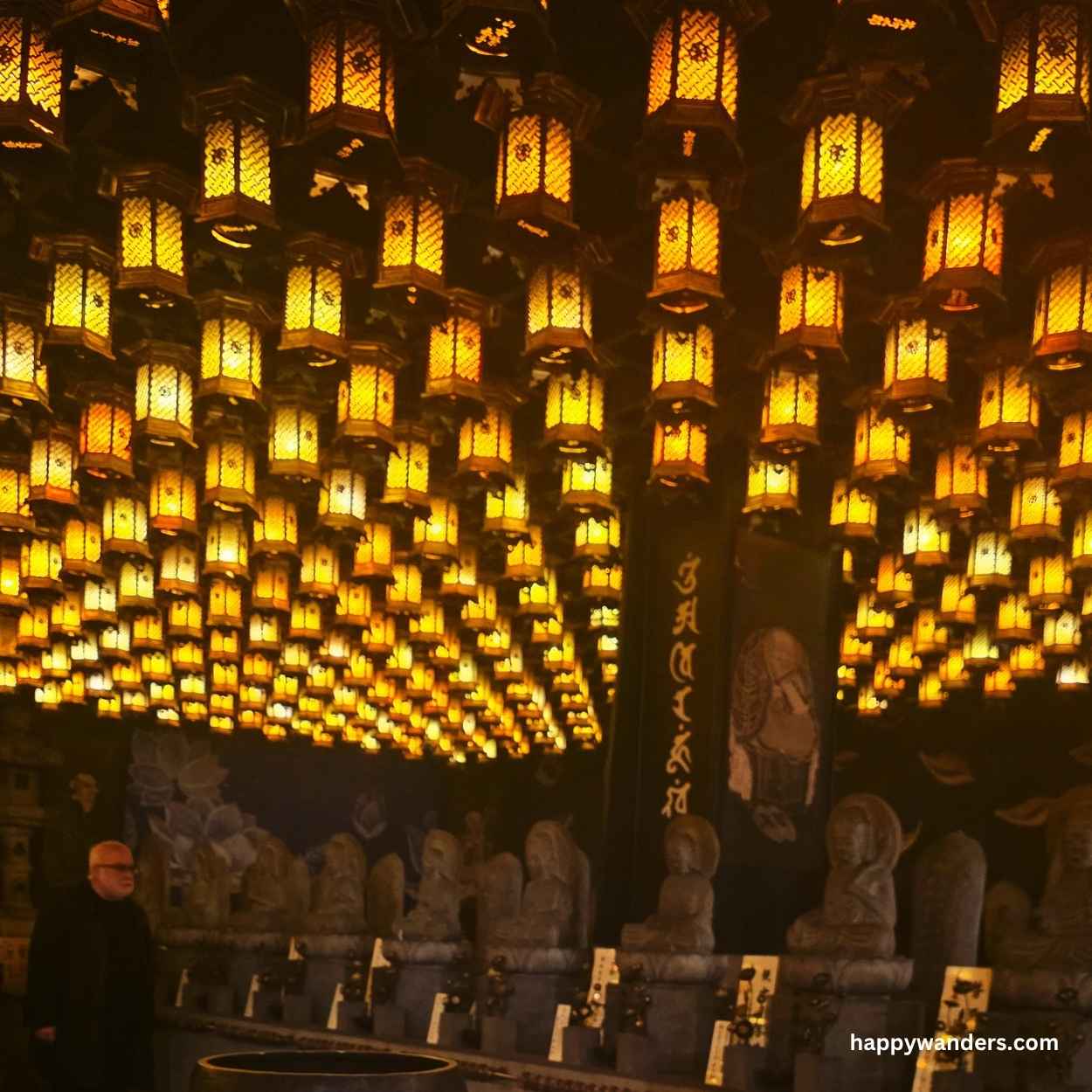
The cavern looks quite fascinating in person and offers exceptional low light for amazing photos and videos.
Ringing The Bell
Located near the temple entrance, the bell is both powerful and symbolic — its deep, resonating sound echoes through the surrounding grounds, creating a calm and reflective atmosphere. Learning how to properly ring it adds a deeper cultural connection to your visit. This traditional ritual allows visitors to strike the bell for good luck and to dispel negative energy and desires, a meaningful practice rooted in Buddhist tradition.
Watch as a woman demonstrates how to ring the large, sacred bell at Daisho-in Temple on Miyajima:
4) Miyajima Ropeway Up Mount Misen
I didn’t have time to take the Miyajima Ropeway Up Mount Misen, but if you’re staying longer than 4 hours, such as staying on Miyajima overnight, I was told that this is a great way to see some of the best views on the island.
5) Free-Roaming Deer
There are about 500 deer on the island of Miyajima, similar to the amount of people residents. Unlike Nara, authorities recommend not petting or feeding the deer on the island.

That being said, there are plenty of opportunities to walk close to deer on the island to snag some fun photos and videos! Here’s an example of a deer just roaming around near people:
6) Stroll Omotesando Shopping Street
Strolling through Omotesando Shopping Street is a fun and easygoing thing to do in Miyajima. This lively pedestrian street is lined with local shops, street food stalls, and small restaurants, giving you a taste of the island’s culture and flavors all in one place. It’s the perfect spot to try specialties like freshly grilled oysters and momiji manju, the maple leaf-shaped dessert Miyajima is known for.
Beyond the food, you’ll also find unique souvenirs and handcrafted goods that make for meaningful keepsakes. Even if you’re not planning to shop much, simply walking through and taking in the energy of the street is part of the experience.
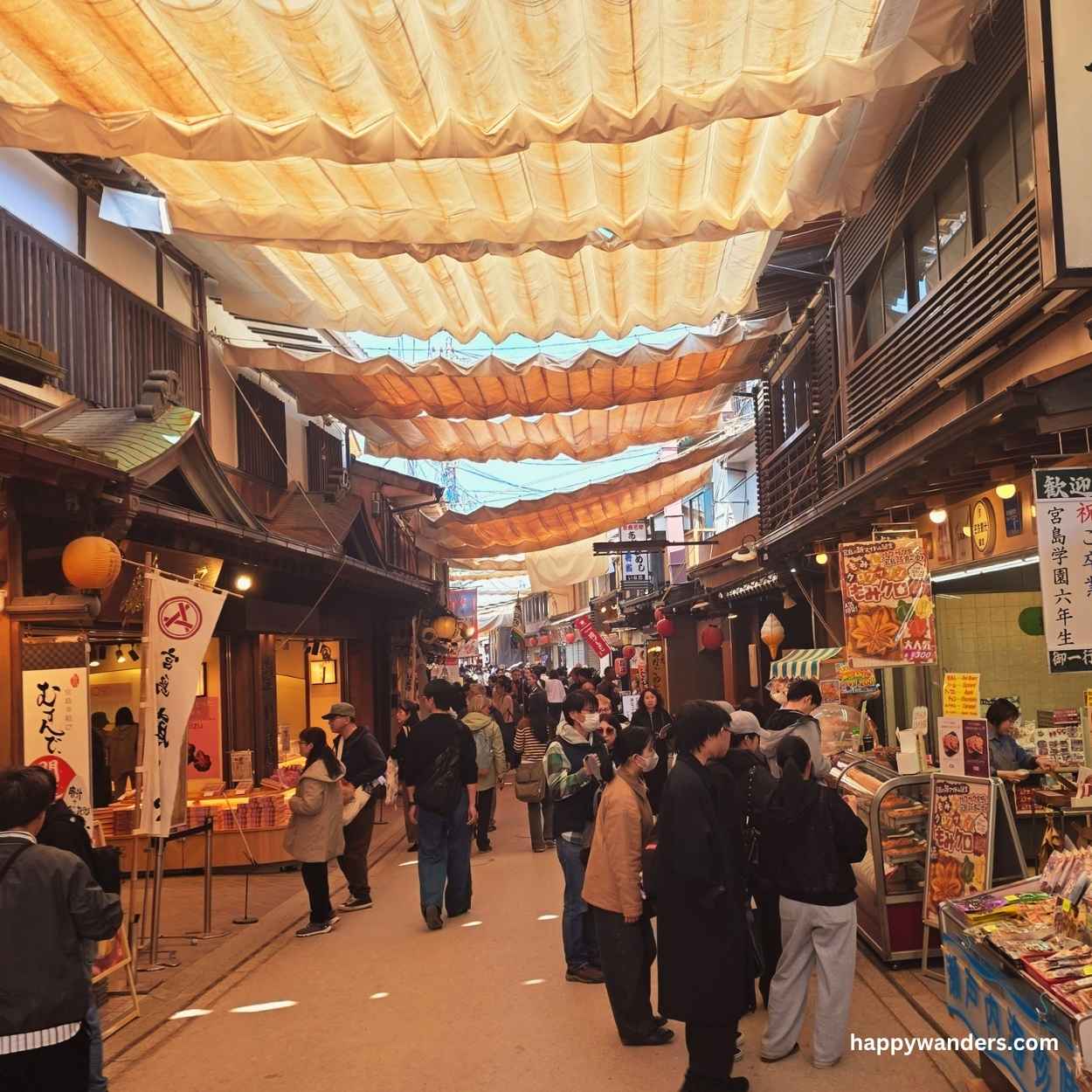
Bonus: While you’re at at, why not try ? Hiroshima-style okonomiyaki is a savory, layered Japanese pancake where ingredients—thin batter, large amounts of cabbage, bean sprouts, pork, and yakisoba noodles.

Tips for Visiting Miyajima After the Fact
Here are some tips for visiting Miyajima after having visited:
- I Strongly Consider Booking a Tour: If you’re a tourist wanting to see Miyajima, I’d recommend booking a tour (such as this one). My tour guide Tomo gave use detailed information about each thing we saw, helping us understand the deep tradition Miyajima offers.
- Definitely Go See Daisho-in Temple: Daisho-in Temple was perhaps the most unique areas I saw on Miyajima besides the floating Torii Gate. I’d definitely allocated at least 45 minutes to 1 hour to climb the stairs and explore the temple.
- Don’t Spend Too Long at Itsukushima Shrine: Yes, I understand that Itsukushima Shrine is a UNESCO World Heritage site due to it’s history. While I do recommend walking through it, don’t spend too long here if you have limited time.
Overall Review of Miyajima, Japan
If you’re still on the fence about visiting Miyajima, don’t be. Miyajima is a lovely scenic island in Japan with tons of history. I really enjoyed my morning visit to Miyajima and think it’s worth going to if you find yourself anywhere near Hiroshima.
My overall score of Miyajima is 9.2 / 10.

Final Thoughts on Finding the Best Things to do in Miyajima, Japan
Thank you for reading my blog highlighting the best things to do in Miyajima! Whether you’re drawn by the iconic floating torii gate, the peaceful temples, or the lively Omotesando Shopping Street, Miyajima offers a mix of culture, nature, and unforgettable experiences. If you’re looking for a beautiful experience outside Hiroshima, I highly recommend visiting Miyajima.
-
Sale!
-
Sale!
Happy wandering!

Author: Anthony Bart
Hello! Welcome to HappyWanders! My name is Anthony, I'm on a mission to live a life full of adventure and to help you to do the same. I share authentic travel insights from my firsthand experiences, guiding adventure lovers to explore the great outdoors and plan unforgettable trips. No exaggerated hype—just honest perspectives on real adventures, dining, and stays. If you're ready for an adventure, you're my type of person!
Was this resource helpful?


%20in%20PDF%20and%20Word%20Formats&url=https://happywanders.com/product/travel-itinerary-template-blank-in-pdf-and-word-formats/&media=https://happywanders.com/wp-content/uploads/2022/05/Travel-Itinerary-Template-Blank-in-PDF-and-Word-Formats.png)
&url=https://happywanders.com/product/japan-itinerary-travel-guide-14-day/&media=https://happywanders.com/wp-content/uploads/2026/05/Japan-Itinerary-Your-Travel-Guide-For-An-Epic-Adventure-PDF-and-Word-1200x1200.jpg)